


Endress+Hauser offers comprehensive conductivity measurement solutions with high accuracy, covering all measurement ranges and operating conditions — from ultra-pure water and CIP cycles to hazardous areas and stringent hygienic processes.
Conductivity Sensors
In many industrial applications, conductivity sensors play a crucial role in process control, product monitoring, water quality tracking, and leak detection.
Selecting the appropriate sensor depends on the type of application and the conductivity measurement range:
-
-
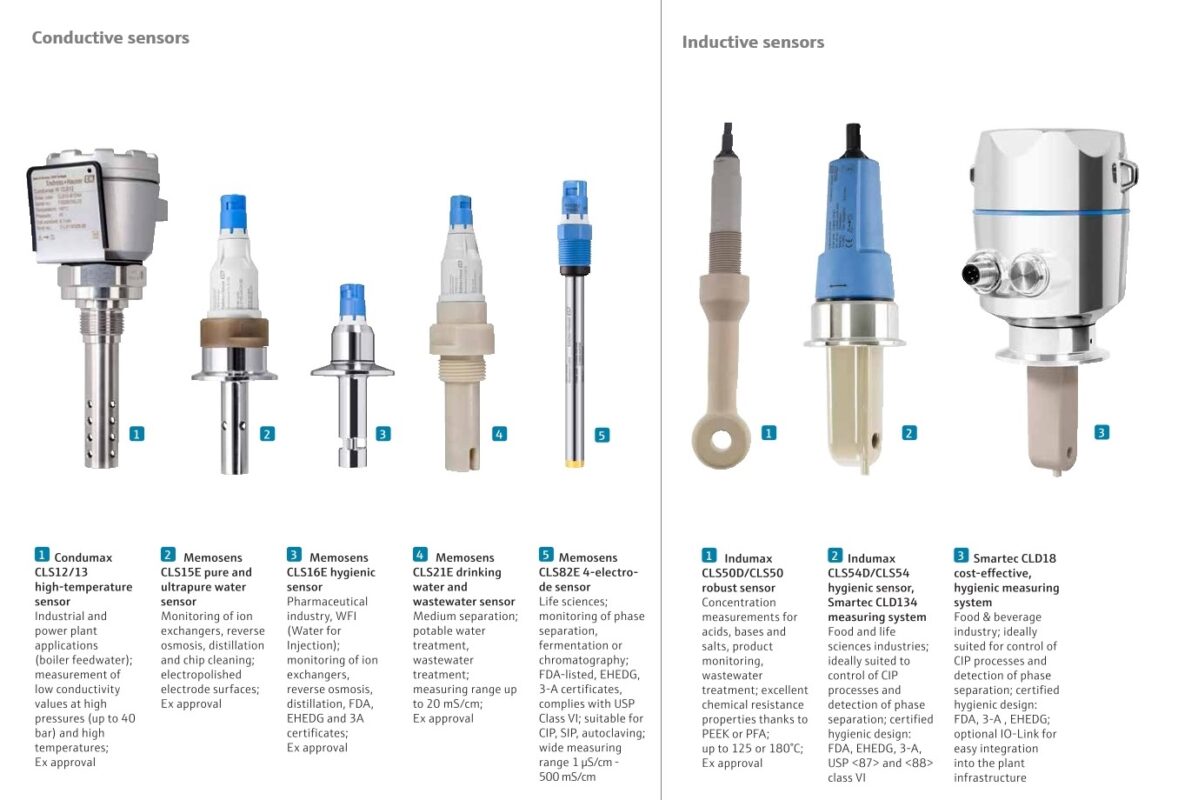
Conductive sensors: Suitable for measuring low conductivity in pure or ultra-pure water.
-
4-electrode conductivity sensors: Optimized for wide measurement ranges, such as phase separation applications.
-
Inductive sensors: Ideal for high-conductivity environments like milk, beer, alkaline, acidic, or saline solutions.
-
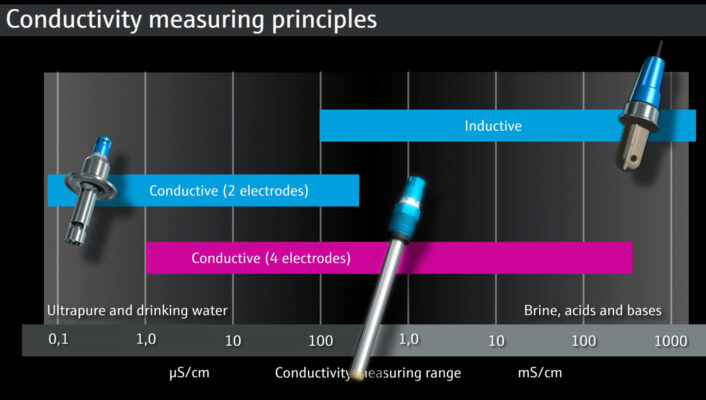
Measuring principle of Conductivity sensors
1. Conductive measurement method
This method uses two or four electrodes to measure the conductivity of a liquid based on Ohm’s law as follows:
-
- Two electrodes are positioned opposite each other in the solution, and an alternating voltage is applied across them, generating an electric current through the medium. This allows the determination of the resistance (R) or its reciprocal, the conductivity (G).
- The specific conductivity (κ) is calculated using the formula: κ = k × G = k / R, where (k) is the cell constant, which depends on the shape and distance between the electrodes.
The more free ions a solution contains, the higher its conductivity. The unit of conductivity is Siemens per meter (S/m).
With the four-electrode method, the sensor includes two additional compensation electrodes to eliminate errors caused by polarization effects, thereby extending the measurement range and ensuring high accuracy in high-conductivity environments.
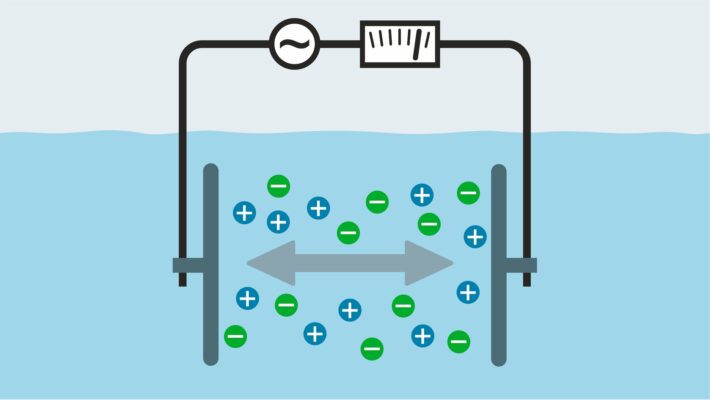
Measuring principle of conductive conductivity sensors
2. Inductive measurement method
Inductive sensors operate based on the electromagnetic principle:
-
- The transmission coil generates an alternating magnetic field.
- This magnetic field induces a voltage in the medium, causing ions to move and generate an alternating current.
- This current produces a secondary magnetic field, which is detected by the reception coil.
- The current intensity is proportional to the number of free ions, thus reflecting the conductivity of the medium.
Inductive sensors are especially suitable for environments with high conductivity, prone to contamination, or containing corrosive chemicals, as they do not come into direct contact with the medium.
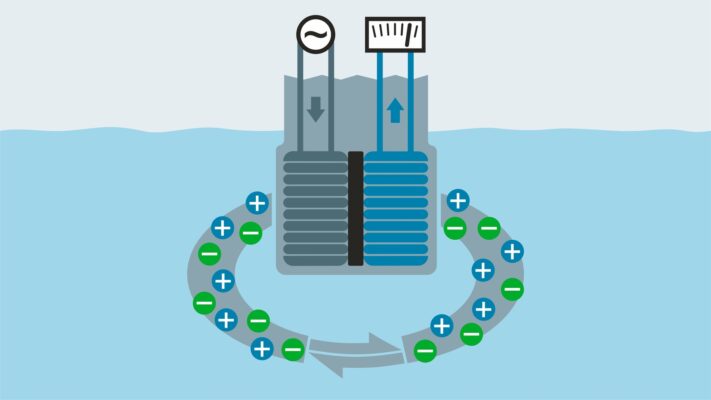
Measuring principle of inductive conductivity sensors
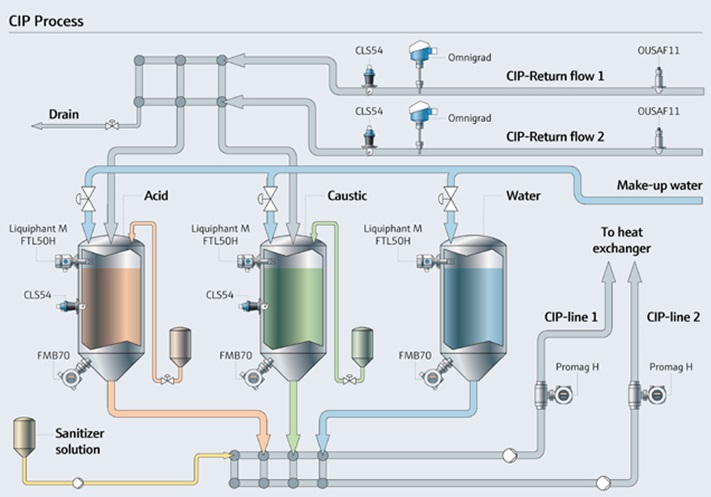
Conductivity sensors for monitoring CIP cleaning chemical concentrations
Advantages of Endress+Hauser Conductivity sensors
✅ Integrated with Memosens technology – ensuring reliability, reducing errors, and shortening maintenance time.
✅ EHEDG-certified — suitable for ultra-pure water, pharmaceutical, and food applications.
✅ Compact devices integrating sensor and transmitter — an optimal solution for the food and beverage industry.
✅ Smooth surfaces achieved through advanced plastic molding technology, reducing fouling and facilitating easy cleaning.
✅Unaffected by polarization (with inductive sensors).
✅ High reliability and long service life, thanks to rigorous manufacturing and testing processes.
Applications of Endress+Hauser Conductivity sensors
Endress+Hauser conductivity sensors are widely used across various industries, including:
-
- Food & Beverage: Monitoring CIP processes to ensure hygiene and product safety.
- Chemical & Pharmaceutical: Determining solution concentrations and ensuring purity.
- Electronics & Energy: Controlling ultra-pure water and boiler feed water in production processes.
- Water & Wastewater Treatment: Monitoring the quality of incoming and outgoing water.
Portfolio of Endress+Hauser Conductivity sensors
Installation of Conductivity sensors
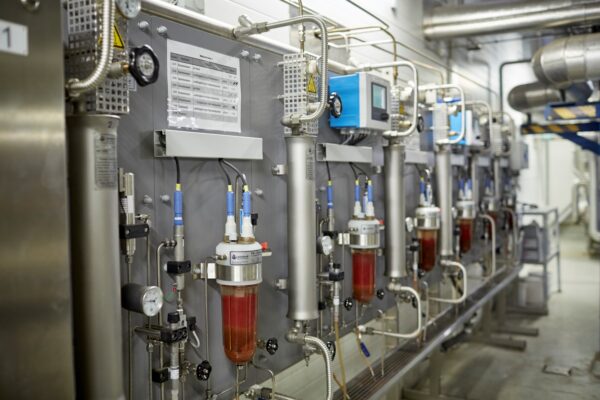
Conductivity sensors for monitoring boiler water quality in industrial plants
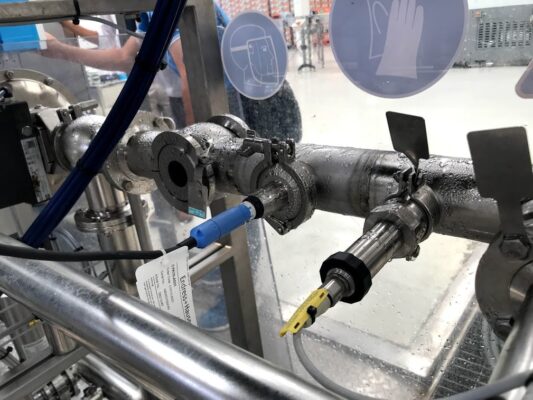
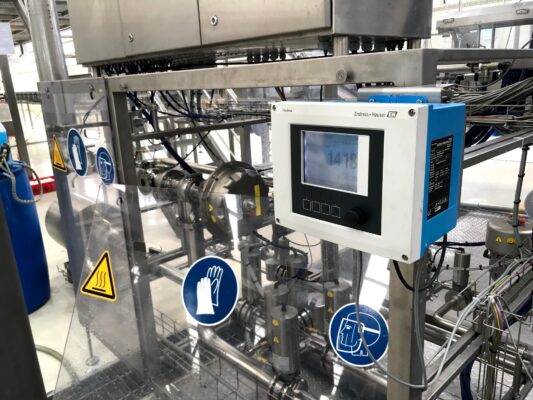
Conductivity sensors in brewery plants
References: Endress+Hauser – Conductivity sensors
Related News

28/07/2026
Multiparameter Handheld – Liquiline Mobile CML18
Liquiline Mobile CML18 is a mobile device for pH/ORP, conductivity, oxygen and temperature measurement in all industries.
View more


Sign up for information
Đăng ký để nhận bản tin mới nhất từ NK Engineering