


Turbidity Sensors
Turbidity is a crucial parameter that reflects the cleanliness of water and the quality of products in many industrial processes. Measuring turbidity enables early detection of fluctuations in suspended solids, ensuring that the output water quality meets standards and optimizing operational costs.
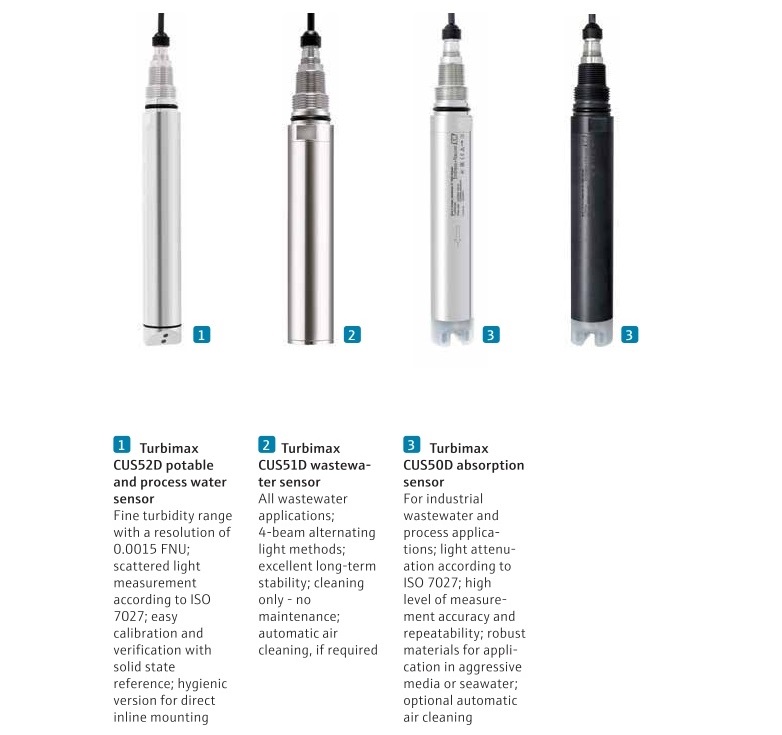
Endress+Hauser turbidity sensors are designed for a wide range of applications—from measuring drinking water, wastewater, cooling water, and desalinated water to detecting product loss in the food and beverage industry. Utilizing advanced optical technology, these sensors deliver accurate and long-term stable measurements, complying with international standards ISO 7027 / EN 27027.
The product portfolio includes:
-
- Turbidity sensors based on light scattering method
- Sensors using the 4-beam alternating light method.
- Turbidity sensors based on the light absorption method.
This allows users to select devices suitable for various measurement ranges—from low to high turbidity—as well as different types of environments, ranging from clean water with low turbidity to sludge and wastewater with high turbidity.
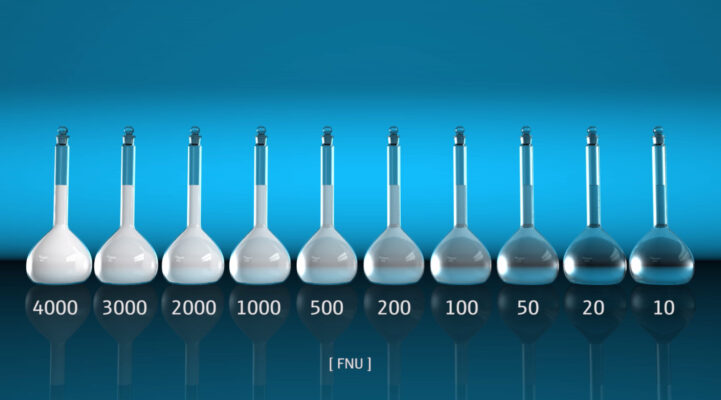
Measuring Principle of Turbidity sensors
1. Scattered light method
The light scattering method operates based on the phenomenon where light emitted from a source is scattered upon encountering solid particles in the medium. The sensor measures the intensity of scattered light at a 90° angle (in accordance with ISO 7027) to detect low turbidity levels, or at 135° for applications with higher turbidity.
The intensity of the scattered light received is directly proportional to the concentration of solid particles in the solution. Based on this, the device calculates and displays turbidity values in units such as FNU (Formazin Nephelometric Unit), NTU, or FTU.
In environments with high turbidity or containing a large amount of suspended solids, the sensor is equipped with two light receivers positioned at 90° and 135° angles relative to the LED light source. The light reflected by particles in the medium is analyzed to determine the total suspended solids concentration (g/L or %TS).
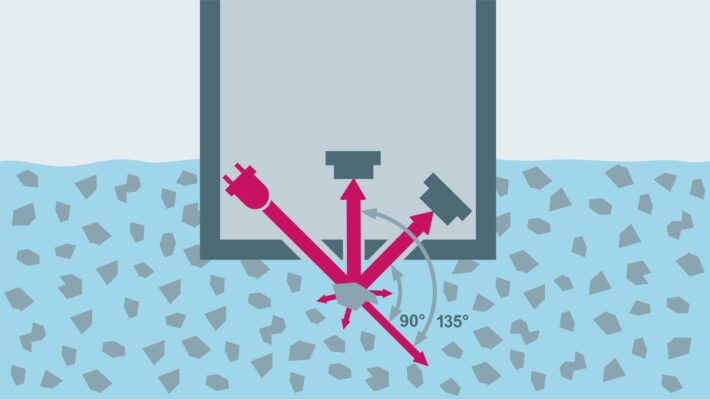
Measuring Principle of Turbidity Measurement Using the Light Scattering Method
2. 4-Beam Alternating Light Method
This is an advanced optical method featuring two LED light sources and four detectors, emitting monochromatic light pulses at high frequencies (several kHz) to eliminate the influence of ambient light.
Each measurement cycle utilizes two distinct light signals, which are processed and compared to compensate for factors causing inaccuracies such as fouling or aging of optical components. This enables the sensor to maintain stable accuracy over extended periods, making it especially suitable for applications requiring continuous water quality monitoring.
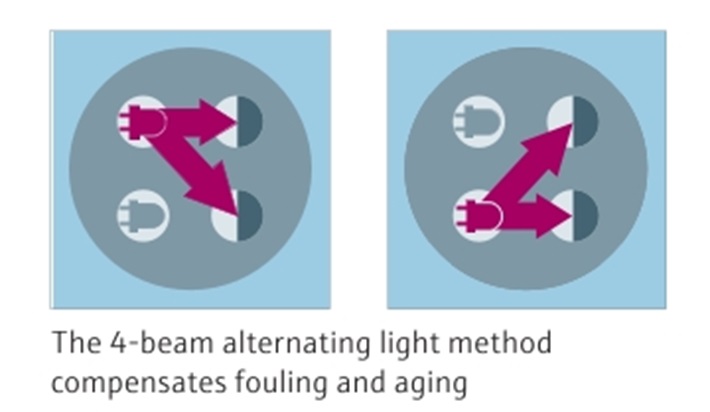
Measuring Principle of Turbidity Measurement Using the 4-Beam Alternating Light Method
3. Light Absorption Method (Attenuation Measurement)
This method is based on the principle of light absorption. The light source emits through the medium to be measured, and the detector is aligned directly opposite the light source. Solid particles in the solution absorb and attenuate the light intensity, with the degree of attenuation proportional to the concentration of suspended solids.
The absorption method is suitable for applications with medium to high turbidity levels, such as sludge treatment, wastewater management, or process control in production environments with high particulate content.
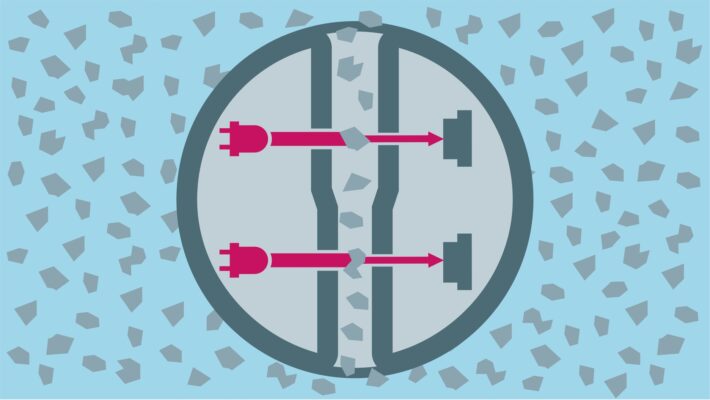
Measuring Principle of Turbidity Measurement Using the Light Absorption Method
Advantages of Endress+Hauser Turbidity sensors
✅ Accurate measurement across a wide turbidity range, compliant with ISO 7027 standards.
✅ Factory-calibrated sensors ensure long-term stability and reliability.
✅ Flexible design suitable for installation in pipelines, open tanks, or inline flow assemblies.
✅ 4-beam technology compensates for measurement deviations caused by fouling or component aging.
✅ Compact design, reducing maintenance costs and allowing easy calibration using solid standards without the need for Formazin solutions.
Applications of Endress+Hauser Turbidity sensors
Endress+Hauser turbidity measuring devices are trusted in various industries:
-
- Water & Wastewater: monitoring influent water quality, drinking water, and controlling sludge and suspended solids in wastewater.
- Food & Beverage: detecting product loss, controlling bottle washing processes, and monitoring filtration stages.
- Chemical & Pharmaceutical: ensuring solution purity and controlling reaction processes.
- Energy & Desalination: monitoring cooling water and seawater intake, protecting systems from contaminants.
With leading expertise in analytical measurement, Endress+Hauser delivers accurate, reliable, and user-friendly turbidity measurement solutions—helping businesses enhance product quality, minimize risks, and optimize production process efficiency.
Portfolio of Endress+Hauser Turbidity sensors
Installation of Turbidity sensors
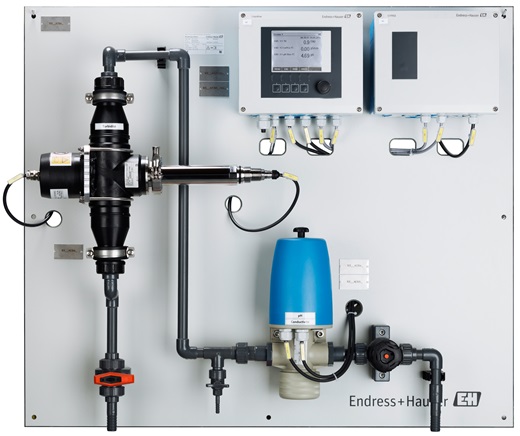
Water Quality Monitoring System Featuring Turbidity Sensors Installed on a Panel
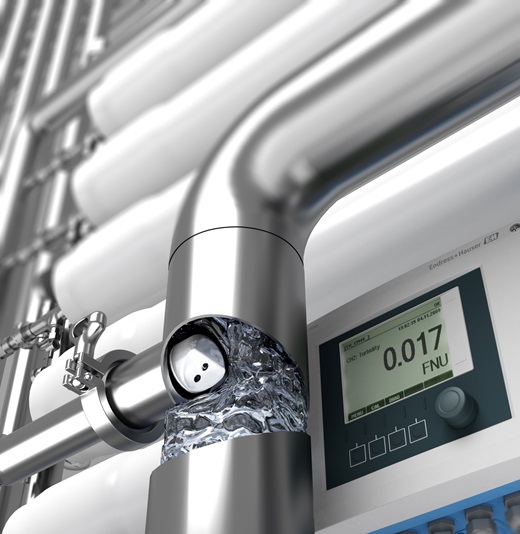
Turbimax CUS52D Turbidity Sensor in Clean Water Measurement Applications
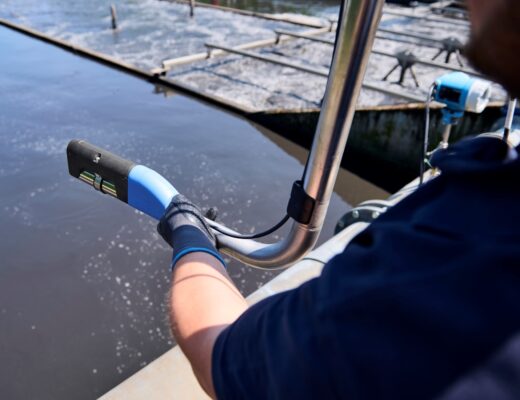
Turbimax CUS51D Turbidity Sensor and CYR51 Sensor Cleaning System in Wastewater Applications
References: Endress+Hauser Turbidity sensors
Related News


